
Why On-Site Testing Matters Before Implementing Automation Systems
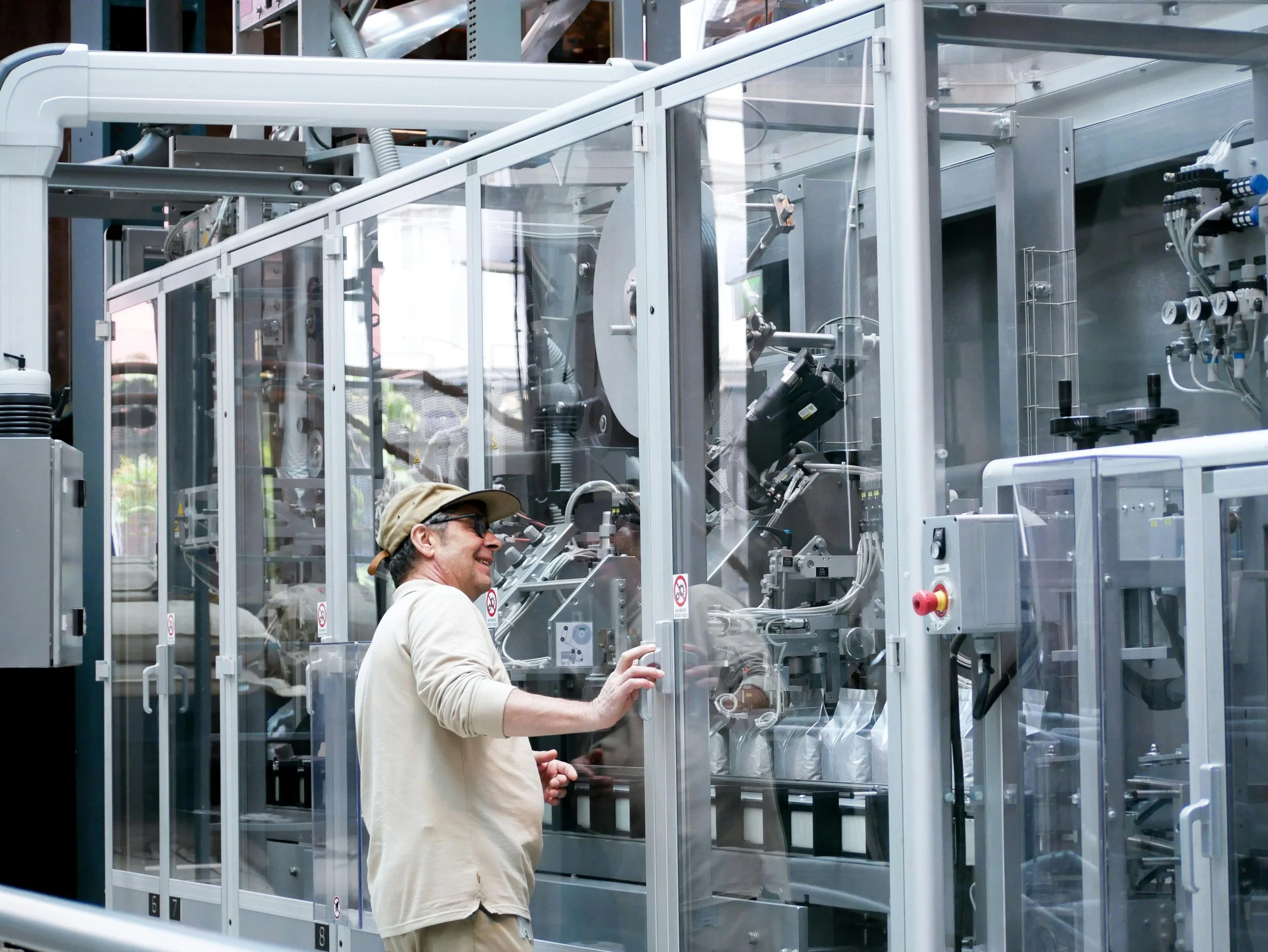
Automation is rapidly transforming modern manufacturing. Across industries, companies are adopting technologies such as machine vision inspection, industrial sensors, and OCR-based traceability systems to improve production efficiency, product consistency, and quality control.
At Logicsense, we often work with manufacturers who are exploring these technologies to enhance their production processes. However, successful automation implementation requires more than simply selecting the right technology. In many cases, the biggest challenge lies in ensuring that the system performs reliably within the actual production environment.
Every manufacturing facility has its own operational conditions, equipment configurations, and environmental variables. Solutions that perform well in controlled demonstrations may encounter unexpected challenges when deployed on the production floor.
This is why on-site testing and validation have become an important step before implementing automation solutions at scale.
The Reality of Automation in Production Environments
Automation systems are often evaluated under controlled laboratory conditions where lighting, positioning, and operational parameters are optimized for performance. While this environment is useful for demonstration purposes, real production environments introduce additional variables that can affect system performance.
Manufacturing environments frequently involve:
varying lighting conditions across production areas
product variations across batches
machine vibration and mechanical movement
limited installation space
integration with existing equipment and control systems
For example, a machine vision inspection system may demonstrate excellent performance during testing, but once installed on the production line, variations in lighting or product positioning could affect inspection accuracy.
Similarly, sensors deployed in automated processes may experience interference from nearby equipment or unexpected environmental factors.
Without proper validation within the real environment, these variables can introduce uncertainty during system implementation.
Why On-Site Testing Is Critical
On-site testing allows automation solutions to be evaluated directly within the customer’s operational environment. Instead of relying solely on theoretical specifications or laboratory demonstrations, manufacturers can observe how a system performs under actual production conditions.
This approach offers several advantages.
First, it enables engineering teams to verify that the automation solution performs consistently within the production environment where it will ultimately operate.
Second, it allows potential integration challenges to be identified early. Production lines often involve multiple systems working together, including sensors, machine vision systems, inspection stations, and existing automation equipment.
Testing solutions within the real environment helps ensure that all components can work together seamlessly.
Finally, on-site validation allows engineers to fine-tune system parameters to better suit the specific production conditions. This helps improve performance and reliability before full-scale deployment.
Evaluating Solutions Through Trial Units
In some cases, manufacturers may benefit from deploying trial units for temporary evaluation. Trial units allow engineering teams to observe how a system performs during normal production operations over a defined testing period.
During a trial phase, companies can assess:
inspection accuracy and repeatability
system stability during continuous production
compatibility with existing machinery
potential improvements in inspection efficiency
Trial units provide practical insights that are difficult to obtain through demonstrations alone. They allow companies to evaluate potential automation solutions with greater confidence before making investment decisions.
Supporting Manufacturers with Practical Automation Solutions
At Logicsense, we support manufacturers in evaluating and implementing practical automation solutions for real industrial environments.
Our solutions include technologies such as:
industrial sensing technologies
machine vision inspection systems
OCR-based traceability solutions
industrial safety systems
automation support and engineering consultation
Rather than focusing solely on equipment supply, our approach emphasizes engineering collaboration and practical validation.
To help manufacturers evaluate solutions effectively, Logicsense provides support such as:
engineering consultation to understand production requirements
on-site testing to validate system performance in real environments
free trial units for selected automation and sensing technologies
This approach allows companies to assess the reliability and compatibility of automation solutions before committing to full implementation.
Explore Automation Solutions with Logicsense
If your team is currently exploring automation, machine vision inspection, OCR solutions, or industrial sensing technologies, our engineering specialists would be happy to discuss your operational requirements.
